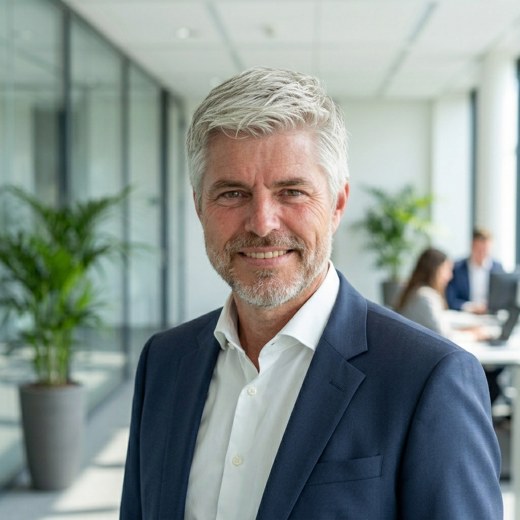
Dirk Odeurs
AI-transformatie en verandermanagement. Industrieel ingenieur, Prince2 Practitioner sinds 2003. Vijftien jaar project-, programma- en changemanagement — en sinds 2016 ondernemer, met een zelf gebouwd AI-native bedrijfsplatform in productie.
Een volledige AI-implementatie in een eigen bedrijf
De meeste auteurs over AI-governance hebben het nooit zelf moeten laten werken. Dirk Odeurs wel — in een eigen bedrijf, met eigen geld, terwijl de zaak gewoon doordraaide. Dat platform heet VediCore en draait vandaag in productie. Wat hieronder staat is niet geraamd maar geteld, in de code die er draait.
Loopbaan
Vijftien jaar veranderingswerk van vóór AI bestond, in energie, overheid, financiële dienstverlening, HR en automotive. De technologie is nieuw; de reden waarom projecten stukgaan niet.
- ERP-systemen geïmplementeerd en gemigreerdMet alles wat daarbij hoort: datakwaliteit, rechten, procesherontwerp en mensen die hun manier van werken moeten opgeven.
- E-businessportalen gebouwd met duizenden dagelijkse gebruikersWaar een ontwerpfout niet in een vergaderzaal opduikt maar in het aantal telefoontjes van de volgende ochtend.
- Een volledige supportafdeling herdacht, op proces én toolingNiet alleen een nieuw systeem, maar de manier van werken eromheen.
- Een veranderingstraject geleid met meer dan vierhonderd beheerdersDe schaal waarop communicatie en eigenaarschap zwaarder wegen dan de techniek.
- Een Europese aanbesteding voorbereid voor de federale overheidWaar de vraagstelling de uitkomst bepaalt, jaren voordat er iets gebouwd wordt.
- Een vastgelopen kennisprogramma opnieuw vlot getrokkenDoor de weerstand serieus te nemen in plaats van eromheen te werken. Dat is meestal de hele oplossing.
En wat dit niet is.
Geen groot adviesbureau en geen dertig AI-transformaties op de teller — dat heeft niemand, het vak bestaat te kort. Wel: vijftien jaar veranderingswerk van vóór AI, tien jaar ondernemerschap aan de ontvangende kant van verandering, en de technische diepgang van iemand die het systeem zelf heeft laten werken. Wie een merknaam op de deur zoekt, zoekt elders.
In het kort
- Achtergrond
- Industrieel ingenieur · Prince2 Practitioner (2003) · Projectmanagement, Vlerick
- Ervaring
- 15 jaar project-, programma- en changemanagement in energie, overheid, financiële dienstverlening, HR en automotive
- Sinds 2016
- Mede-zaakvoerder van een onderneming in de bouwsector
- Hands-on
- Zelf een AI-native bedrijfsplatform ontworpen, gebouwd en in productie genomen — 63 modules, 200 datamodellen
- Talen
- Nederlands, Frans en Engels — vlot in meertalige omgevingen
- Schaal
- Een aanpak voor kleine bedrijven vanaf tien medewerkers én een voor organisaties van enkele honderden
Werkwijze in drie stappen
Wat in de praktijk nodig blijkt, ongeacht de omvang van de organisatie. De volledige uitwerking staat in de twee plannen van aanpak.
Een eerlijk beeld van waar je staat
Vijf dimensies, gescoord met bewijs in plaats van met goede bedoelingen. Plus een inventaris van wat er al draait — inclusief wat niemand heeft aangemeld. Resultaat: een uitgangspunt waar niemand omheen kan.
Een keuze met namen erop
Werksessies per domein met de mensen die het werk doen, kandidaten gescoord op waarde en haalbaarheid, en een keuze: weinig initiatieven, diep uitgevoerd. Elk met een eigenaar, een termijn en een meetpunt.
Van proef naar dagelijkse praktijk
De stap waar de meeste trajecten sneuvelen. Gemeten uitgangspunt, kwaliteitstests, beheer en eigenaarschap geregeld vóór de uitrol — en een go-beslissing die een rekensom is in plaats van een discussie.
Standpunten
Laat het zien
De vraag is niet of er een beleidslijn bestaat, maar of ze te zien is en wie ze kent. Het verschil tussen die twee antwoorden is meestal de hele diagnose.
Eerst kijken, dan regels maken
Wie beleid schrijft vóór hij weet wat er draait, regelt een werkelijkheid die hij nooit gezien heeft. Die volgorde wordt hier niet omgedraaid.
Geen uitgangsmeting, geen proef
Zonder cijfers van vóór de start is elke besparing een mening. Dat is de belangrijkste reden waarom investeringen stilvallen.
Wat je schrapt telt zwaarder dan wat je start
Een lijst zonder afgevoerde ideeën is geen keuze maar een verlanglijst. In de praktijk wordt een programma pas geloofwaardig op de dag dat er iets zichtbaars sneuvelt.
Er is altijd iemand aanspreekbaar
Niet als ethische voetnoot maar als ontwerpeis. Wie een systeem bouwt waarvan achteraf niemand kan uitleggen waarom het besliste zoals het besliste, heeft het werk niet af. De wetgever denkt daar intussen hetzelfde over.
Eerlijk over onzekerheid
Cijfers worden hier gebruikt mét hun beperking. Wie een onderzoekscijfer citeert zonder te zeggen wat er precies gemeten is, verkoopt iets.
Vragen of reacties op de aanpak
Wie met deze aanpak aan de slag gaat en op een vraag stuit, of het ergens grondig mee oneens is: ik hoor het graag. Een methode wordt beter van tegenspraak.
dodeurs@gmail.comof bel +32 478 544 682